













What Architects Should Know About Installing Architectural Terracotta Panels vs. AFC TerraSlat
Industry Insights 10.12.26
Industry Insights 10.12.26
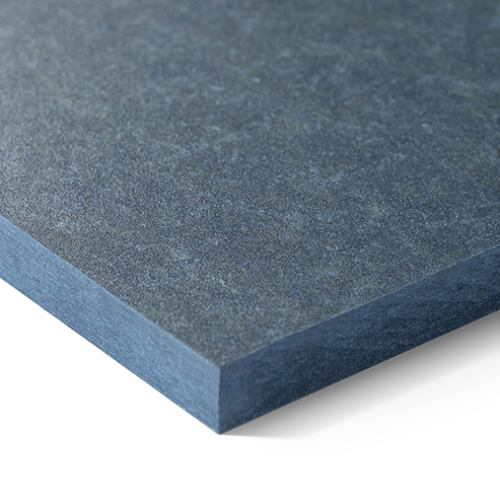
Terracotta panels are earning a fresh look from architects, and we get why. There's something about the warmth of fired clay that fiber cement and metal panels just can't replicate, but terracotta's reputation for heavy weight, high costs, long lead times, and finicky installation has scared plenty of good designs away from it over the years. That reputation is starting to change. AFC TerraSlat by Tonality® is a single-layer terracotta slat made from Westerwald clay, sourced from one of the highest-quality clay deposits in the world, and it solves a lot of the traditional headaches without giving up the look architects want. Before you specify terracotta panels on your next project, let's walk through what actually matters once the material leaves the drawing board and heads to the jobsite.
The good news is that modern terracotta rainscreen systems, including lighter formats built for easier handling, have changed that equation. Before you specify terracotta panels on your next project, let's walk through what actually matters once the material leaves the drawing board and heads to the jobsite.
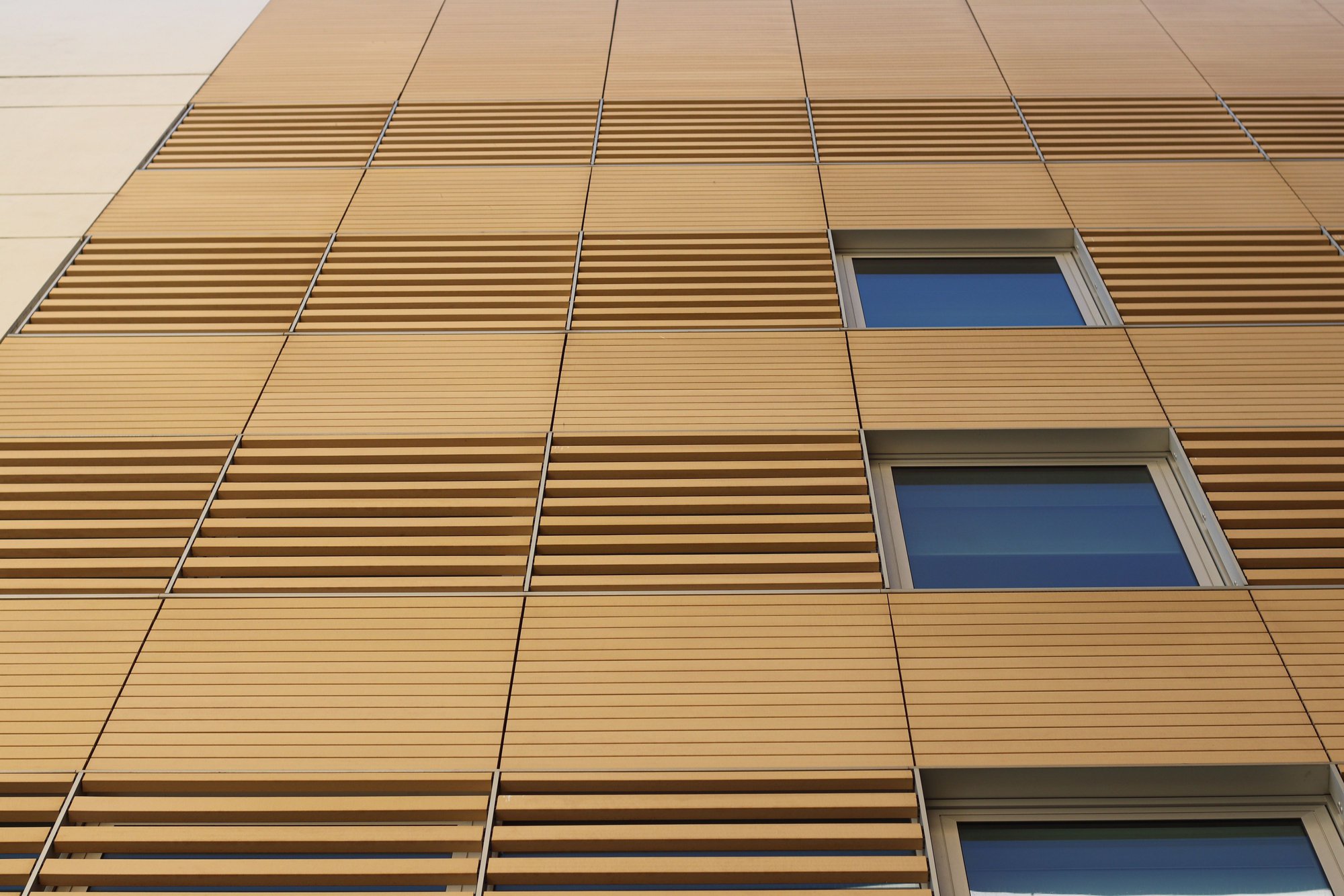
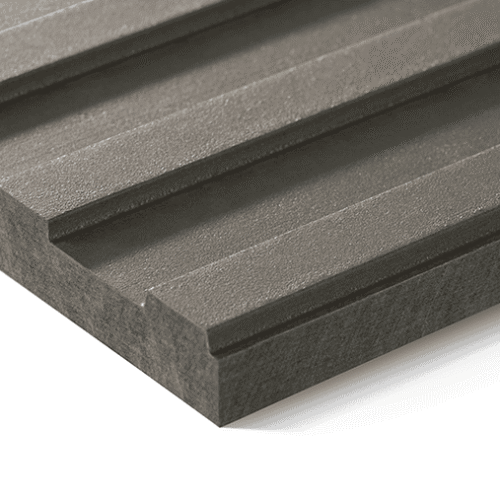
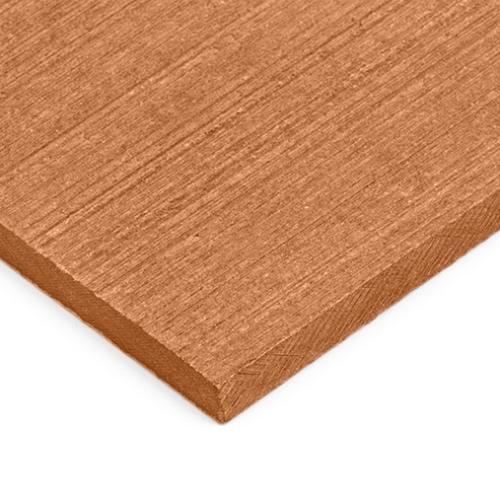
Terracotta panels almost always get installed as part of a ventilated rainscreen system, not as a standalone veneer. In a rainscreen assembly, the terracotta panel serves as the outermost layer, while an air gap behind it lets moisture drain and evaporate before it ever reaches the building envelope. Traditional terracotta requires two layers of material within the extrusion, adding weight, which in turn demands a heavier attachment system. TerraSlat's Westerwald clay gives the slat its strength in a single-layer profile instead, cutting weight dramatically compared to conventional terracotta panels. Less weight means a lighter, less robust attachment system, easier handling on site, and a lower installed cost overall. It's worth browsing terracotta panel colors and formats to see how that single-layer approach translates into real project options.
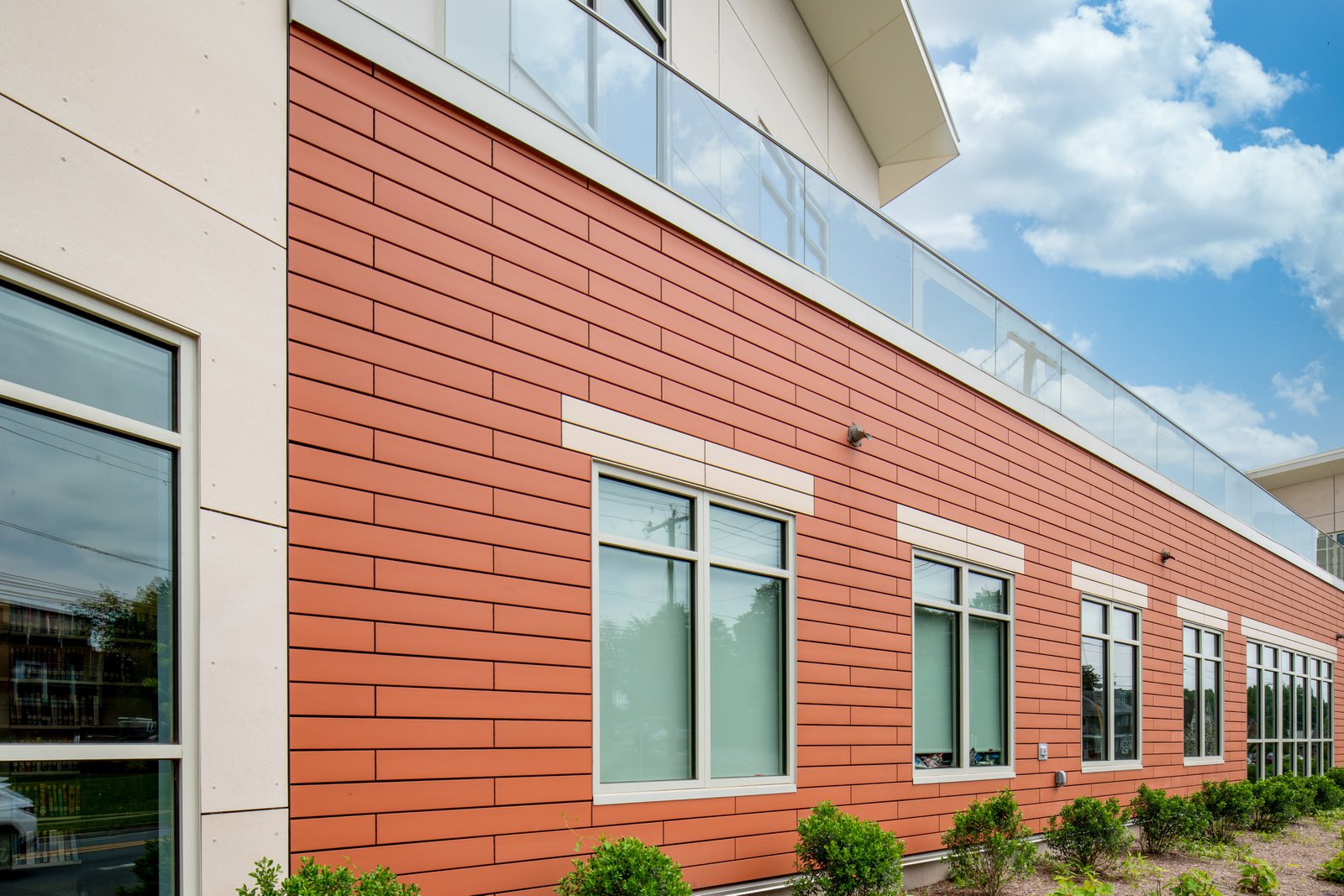
Terracotta panels lean on a subframe system to carry their weight and send loads back to the structure, and this is where TerraSlat's single-layer format really shows its advantage. Its light weight and simple profile allow for a straightforward hook attachment system, which installs faster than the clip and rail assemblies that heavier terracotta systems require. Each TerraSlat unit measures 140mm by 1240mm and weighs under 13 pounds, light enough that a single worker can set it in place. Our shop drawing and panel layout design team can walk you through exactly how that hook system integrates with your structure before fabrication and installation begins.
Water is where most facade problems begin, so it deserves attention from day one regardless of which terracotta system you choose. TerraSlat holds up against moisture absorption just as well as traditional terracotta, and the assembly around it still needs a properly detailed weather barrier, flashing, and drainage plane to do its job. Specify a vapor-permeable membrane that lets incidental moisture escape rather than trap it, and review weather barrier options built for ventilated rainscreen applications while finalizing your terracotta selection. Pair the right membrane with AFC TerraSlat, and you get a system built to perform longer than any other cladding material on the market.
TerraSlat comes in one size, and we won't pretend that doesn't trade away some flexibility compared to custom-cut terracotta. But that flexibility comes right back through layout. Slats can run stacked, in a half-offset brick pattern, a third-offset pattern, or vertically oriented and stacked or offset, and you can even angle them for a more dynamic elevation. Because every slat is the same size, TerraSlat is stocked here in the U.S. and ready to ship, without the long custom order lead times traditional terracotta requires. If a slat breaks on site, a replacement can arrive the same week. Weather-resistive barriers, rails, plus the slats, are delivered under $25 per square foot.
Terracotta panels headed for commercial rainscreen use should come with documented fire performance and structural testing data that matches your project's code requirements, and TerraSlat is no exception. Product performance holds up right alongside custom terracotta, at roughly a quarter of the price, which makes it worth a close look, even on projects that started out assuming custom terracotta was the only option.
According to the International Masonry Institute, rainscreen assemblies have grown considerably more sophisticated as building science has advanced, with dedicated organizations now guiding proper design and installation practices across the industry. Rainscreen wall assemblies are contemporary cladding systems predominantly defined by their functionality, incorporating the cladding material along with continuous air and moisture control layers, insulation, flashing, and an air space. That's a good reminder that terracotta panels succeed or fail based on the whole assembly working together, not the cladding material alone.
Speed on site is where TerraSlat's lightweight and simple attachment really pay off. On a recent project, an entire 750-square-foot elevation was installed in just three days with only two workers — one cutting slats and one setting them from the lift. That kind of timeline is hard to match with heavier, custom terracotta systems. Architects tend to get the best results when they loop their terracotta supplier into the conversation early, ideally during schematic design, so panel layout, attachment strategy, and installation sequencing are all sorted out before the facade is finalized.
If you're weighing terracotta panels for an upcoming design, we'd genuinely love to hear about it. Give us a call at 303-972-5107 and tell us about your project. Our team has years of experience with shop drawings, panel optimization, fabrication, and installation support. Reach out to us at 303-972-5107 or house@afccladding.com, and let's figure out the right terracotta approach together, on time and done right.