













How a Fiber Cement Rainscreen Manages Airflow and Panel Movement
Industry Insights 10.05.26
Industry Insights 10.05.26
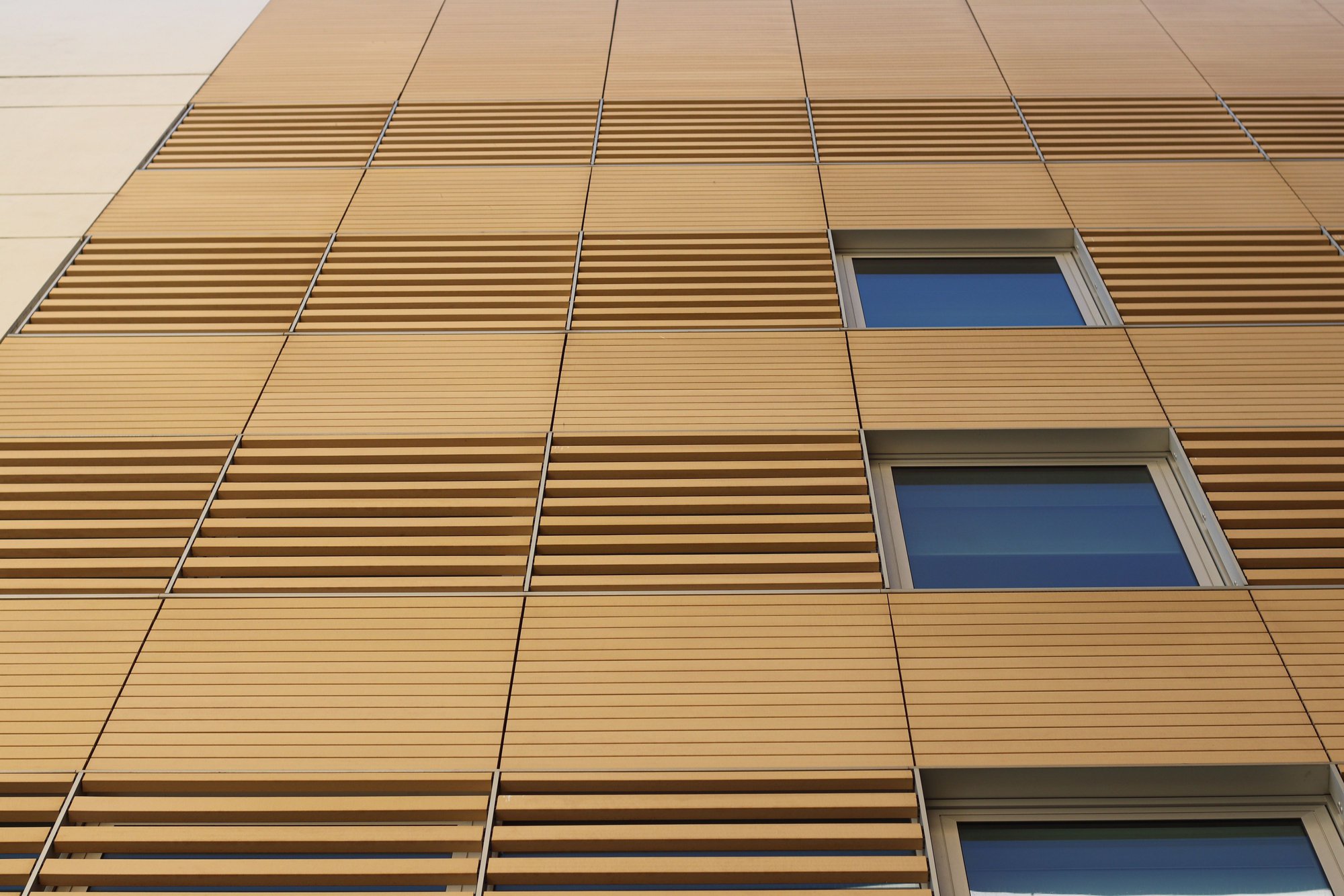
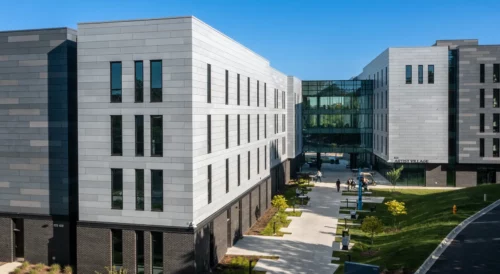
Fiber cement rainscreen systems do more than give a building a clean, modern face. Behind every panel, an engineered air cavity is quietly managing moisture, temperature, and structural movement. That's what lets the facade perform for decades, not just years. If you specify or install a fiber cement rainscreen, understanding how that hidden cavity works matters. It's just as important as choosing the right panel color or texture, and it's a detail we've watched make or break projects over the last 37 years.
Let's walk through the four key elements that make a fiber cement rainscreen function properly. Cavity depth, termination openings, the chimney effect, and the fixed and gliding point system that lets panels move safely with the building.
The air cavity behind a fiber cement panel is not just an installation gap. It is a functional space designed to let air move freely. It also allows incidental moisture to drain and equalizes pressure between the outside environment and the wall assembly. Depending on the panel run and panel layout, the air cavity depth can be as low as 3/4" or as high as 1 1/2". Many projects use a deeper cavity, depending on insulation thickness, panel size, and local climate demands.
A cavity that's too shallow restricts airflow and slows drying. That can trap moisture against the weather-resistive barrier, the layer doing the real work of keeping water out of the wall. A properly sized cavity keeps the assembly ventilated. It lets any water that gets past the panels drain out quickly and harmlessly. It's a small detail on the drawings that we've seen get overlooked more than once. That's why our own ventilated rainscreen systems are built around getting cavity sizing right from the start, so the wall assembly can breathe the way it's meant to.
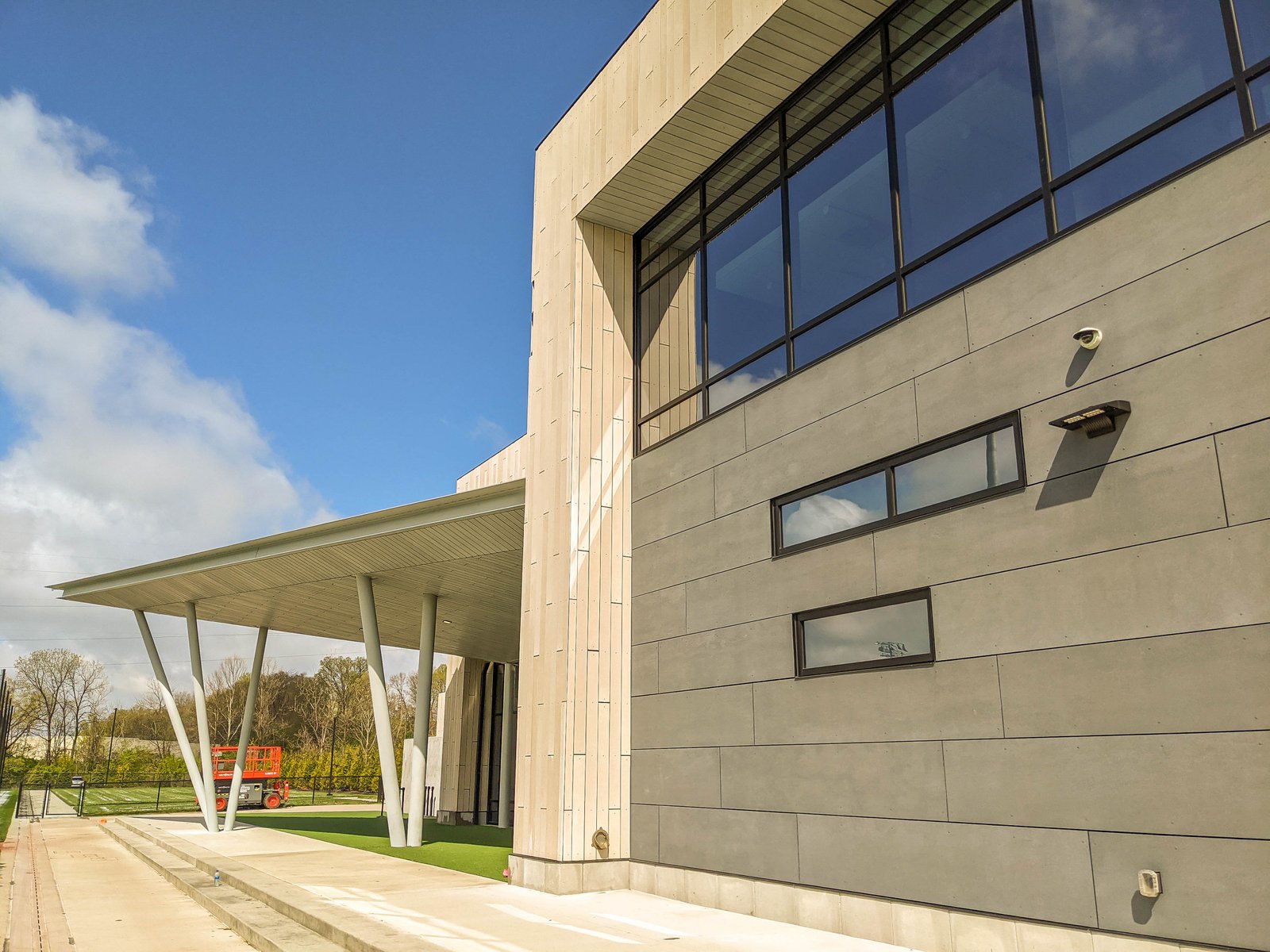
A rainscreen only works if air can actually get in and out of the air cavity. That's why termination details deserve careful attention at every transition point.
Getting these details right at each transition is what keeps the whole system connected. It functions as one continuous, ventilated assembly rather than a series of isolated panel runs. It sounds like a lot of small moving parts, and it is. But this is exactly the kind of coordination we walk through with project teams every day.
Once air can move freely at the base and top of the wall, something helpful starts to happen naturally. Warm air inside the cavity rises, pulling cooler air in from the bottom in a continuous cycle. This is often called the chimney effect, and it is one of the reasons rainscreen assemblies outperform face-sealed systems.
That rising airflow does two important jobs. It carries moisture vapor up and out of the cavity before it can condense on the panel's back or the insulation's face. It also helps regulate wall temperature by reducing solar heat buildup behind the cladding. Put simply, the wall gets to breathe instead of holding its breath, and the front and backside of the panel remain in equilibrium from a moisture retention perspective. The result is a facade that dries faster after wetting events and holds up better against long-term moisture exposure. That's part of why we take a whole assembly approach to product sustainability, rather than looking at panel performance in isolation.
Fiber cement panels expand and contract with changes in temperature and humidity, just like most building materials. A well-designed rainscreen attachment system accounts for this movement through what is known as a fixed point and gliding point arrangement.
There are two fixed points nearest the center of every panel. They hold the panel firmly in place and set its reference position on the substructure. Every other fastening point on that panel is a gliding point. It's engineered with slotted holes or flexible fasteners that let the panel expand and contract without restricting movement or stressing the material.
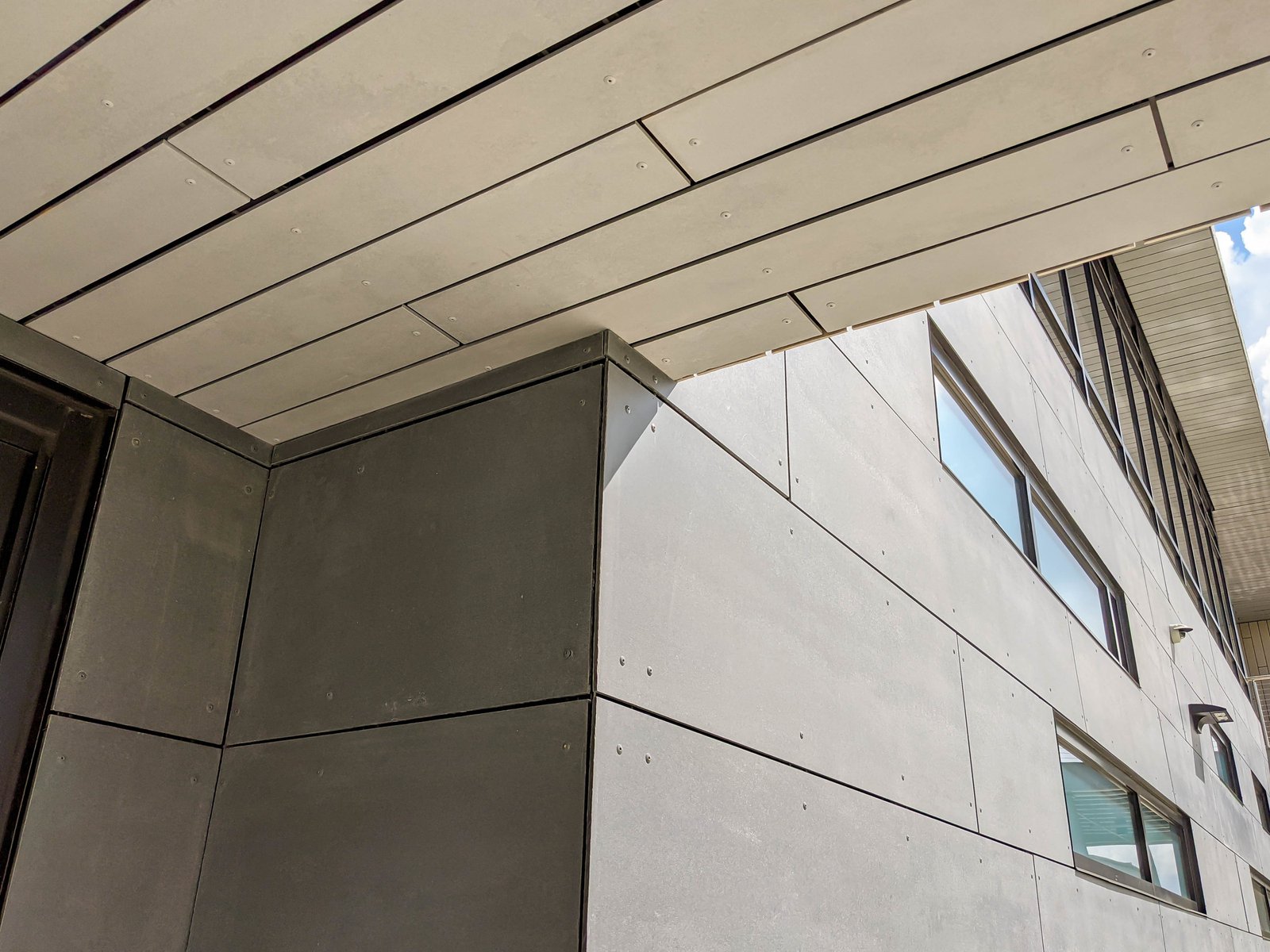
This approach prevents the kind of pressure that leads to cracking, bowing, or fastener failure over time. It also means the panel can respond naturally to seasonal temperature swings, without transferring that stress to neighboring panels or the substructure behind it. For architects specifying fiber cement, confirming a clearly defined fixed and gliding point layout is one of the easiest ways to protect long-term facade performance. It's a detail our team thoroughly references on every set of shop drawings.
These principles are not unique to any single manufacturer. Organizations like the Air Barrier Association of America have long emphasized that continuous, well-ventilated wall assemblies are central to long-term moisture control. They're also key to energy performance in commercial buildings. Fiber cement rainscreen systems are designed with these same principles in mind, pairing proven building science with a durable, low-maintenance material.
Cavity depth, termination detailing, and attachment layout all sound straightforward until you're staring at a real set of drawings. Every project has its own quirks that deserve a real conversation. If you're working through a fiber cement rainscreen assembly, feel free to request a sample from American Fiber Cement. Tell us about your assembly, climate, and panel choice, and we'll help you get it right, from first sketch to last panel.